

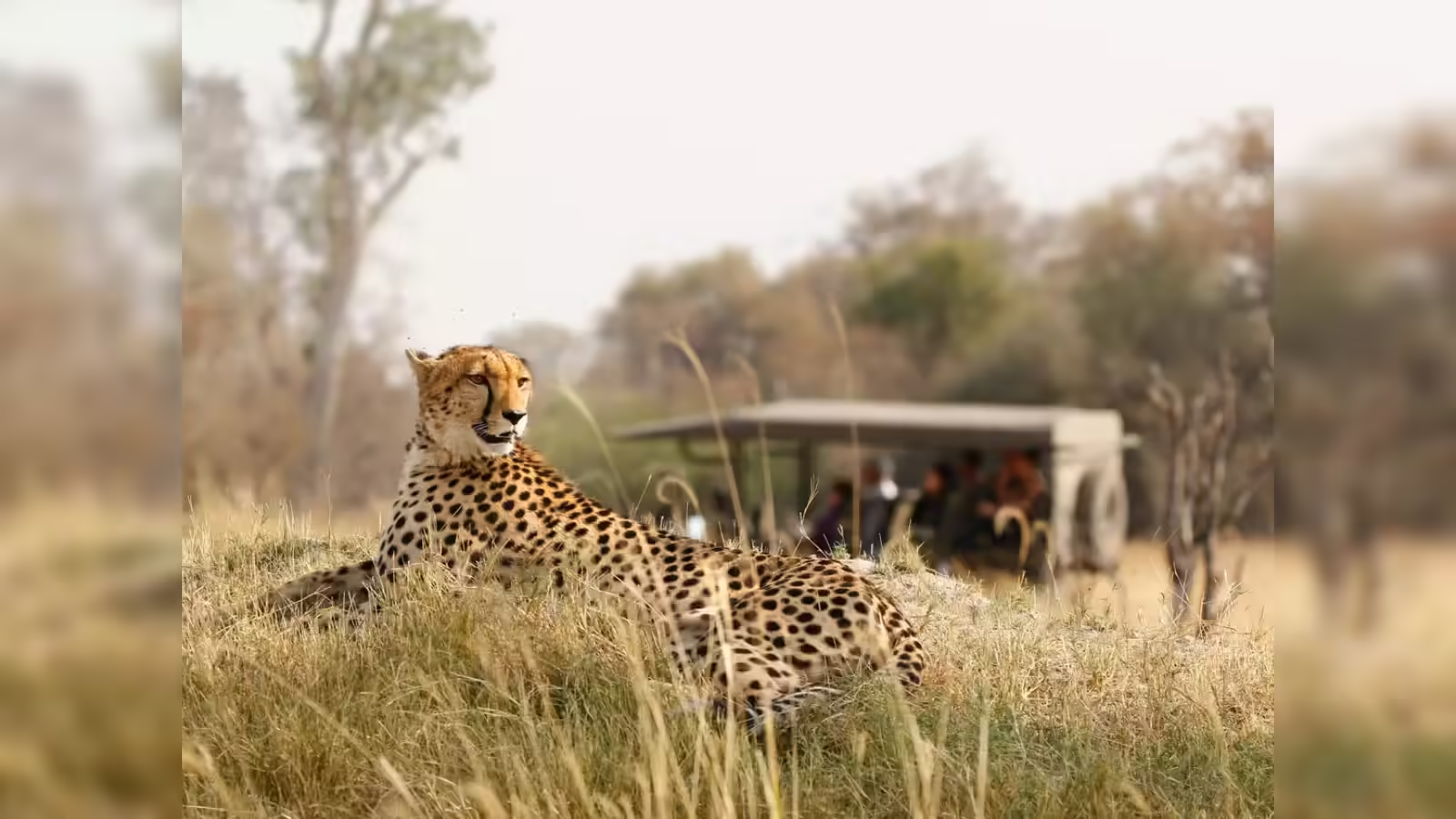
When you think of Botswana, your mind likely drifts to the shimmering floodplains of the Okavango Delta or the elephant-heavy corridors of Chobe. It is a country that has become a global gold standard for low-impact, high-value tourism. But behind the scenes of these dreamy luxury safari holidays lies a complex web of conservation work that ensures these ecosystems remain untamed.
Botswana has committed a staggering 34% of its land to game parks, reserves, and wildlife management areas. However, the survival of these regions doesn’t happen by accident. It is driven by dedicated initiatives that balance the needs of wildlife with the realities of local communities. If you are looking to travel with purpose, understanding these initiatives is the first step toward becoming a more responsible explorer.
Here are 10 of the most vital conservation programs currently protecting Botswana’s wild heart.
- Elephants for Africa
Elephants are the heavyweights of Botswana’s landscapes, but they are increasingly running out of space. As human populations expand, the overlap between wild corridors and agricultural land creates friction. Elephants for Africa focuses on the often-overlooked demographic of male elephants. By understanding their specific social and ecological requirements, the program develops local solutions for human-wildlife coexistence.
Their work is as much about education as it is about biology and aiming to inspire the next generation of Botswana conservation leaders.
- Mokolodi Wildlife Foundation
The Mokolodi Wildlife Foundation was formed in 1991 to promote conservation and wildlife education. It eventually led to the founding ofthe Mokolodi Nature Reserve, which is a testament to habitat restoration. Located near Gaborone, this 3,700-hectare reserve serves as a critical education hub.
Each year, over 9,000 children visit their Education Centre to learn about endemic species and environmental stewardship. Supporting Mokolodi means supporting the foundational knowledge of Botswana’s future custodians.
- Botswana Predator Conservation (BPC)
The Big Five often get the spotlight, but Botswana’s large carnivores, namely the African wild dogs, cheetahs, and hyenas, are the true indicators of a healthy ecosystem. BPC uses applied conservation research to manage these threatened species. Their work focuses on the guild of carnivores, ensuring that management policies protect the entire predatory hierarchy rather than just a single species.
- Cheetah Conservation Botswana (CCB)
Botswana is home to roughly 1,700 cheetahs, which is nearly 25% of the world’s remaining wild population. CCB works specifically with rural farming communities to mitigate conflict. By providing practical tools to protect livestock, they ensure that farmers see the cheetah as a manageable neighbor rather than a threat to their livelihood.
- Kalahari Conservation Society (KCS)
As the oldest environmental NGO in the country, KCS is a powerhouse of policy and science. They lobby for national development plans that take environmental considerations into account. Their scope is broad, covering everything from transboundary park initiatives to scientific research that forms the backbone of Botswana’s conservation laws.
- BirdLife Botswana (BLB)
The health of an ecosystem is often written in the sky. BirdLife Botswana focuses on saving species from extinction and protecting vital habitats. Their work is a reminder that conservation isn’t just about the large mammals. The common birds and migratory species are equally essential to the ecological balance of the wetlands and savannas.
- Rhino Conservation Botswana (RCB)
Rhinos have faced a perilous road in Southern Africa. RCB works in close partnership with the government to monitor and protect black and white rhinos, particularly within the safe havens of the Okavango Delta. Their goal is to build populations that are not only stable but also of international significance for the survival of the species.
- Botswana Wildlife Producers Association (BWPA)
Conservation in Botswana often follows a model of sustainable utilization. The BWPA represents stakeholders who manage wildlife through responsible and ethical options, including controlled hunting and game ranching. Their strict code of conduct ensures that these activities contribute directly to the economic value of wildlife for local communities.
- Botswana Community & Conservation Initiative (BCCI)
Conservation only works if it benefits the people living on the ground. The BCCI focuses on landscape-scale movements, ensuring wildlife can move freely across regions while developing sustainable land-use practices for rural communities. It is a holistic approach that builds climate change resilience and economic opportunity.
- The Ecoexist Project
In the northern reaches of the country, where elephant paths cross farmers’ fields, Ecoexist finds the middle ground. They provide farmers with affordable tools to deter crop-raiding and gather data to address the root causes of conflict. By fostering elephant-aware agriculture, they turn a point of friction into a model for coexistence.
Conclusion
Botswana’s success as a premier safari destination is built on the hard work of these initiatives. When you visit, you become a participant in a grand ecological experiment. By choosing operators that partner with these programs or by supporting them directly, you ensure that the untamed chapters of Botswana remain written in the wild for generations to come.
True exploration is about so much more than what you see on a game drive; it’s about the impact you leave behind. Supporting these meaningful initiatives is the smartest way to ensure that impact is a positive one.